Desserts
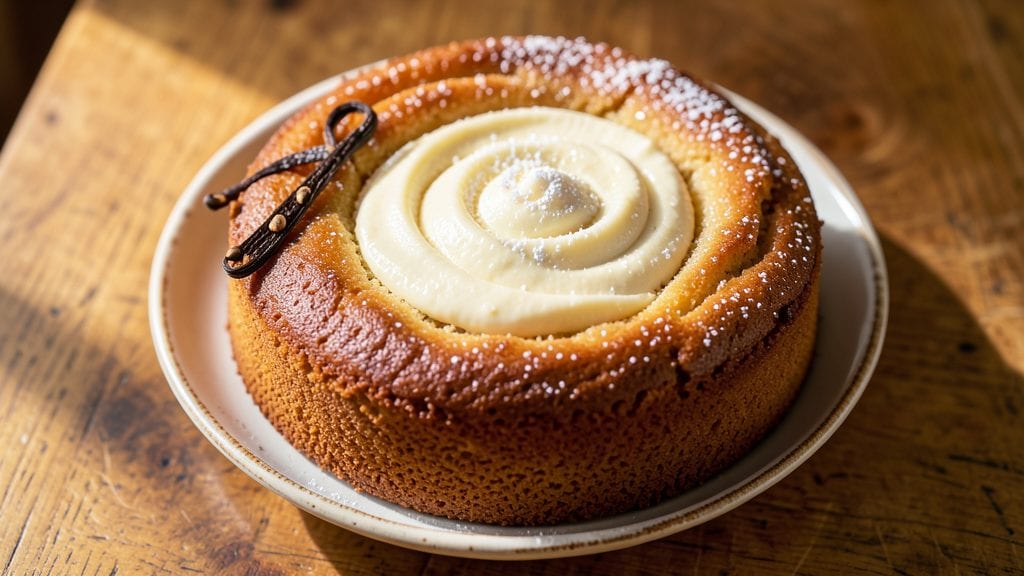
This old-fashioned cream cheese pound cake recipe delivers the perfect balance of rich, buttery layers and velvety vanilla swirls that evoke memories of Sunday afternoons. The secret lies in a precise blend of flour, sugar, and cream cheese that creates a tender yet sturdy crumb—ideal for slicing or frosting.
I’ve perfected this version over years of baking, ensuring every bite has that signature moistness and subtle tang from the cream cheese.
The recipe begins with a classic pound cake foundation, where butter and sugar are creamed to perfection before adding eggs and vanilla. What sets this apart is the addition of cream cheese to the batter, which keeps the cake tender while adding depth of flavor.
The vanilla bean swirls are made by folding in a simple mixture of vanilla bean paste and powdered sugar, creating beautiful golden streaks throughout each slice.
By the time it emerges from the oven, you’ll have a cake with a golden crust and a moist interior, where every forkful reveals layers of buttery richness and sweet vanilla.
The cream cheese element ensures it’s never dry, while the vanilla swirls add a touch of elegance without overpowering the classic pound cake flavor. This is the kind of dessert that feels both nostalgic and perfectly modern.
Serve it plain with a dusting of powdered sugar, or frost it with a simple glaze for a showstopping presentation. The cake keeps well at room temperature for days, making it perfect for gatherings or enjoying a slice whenever the mood strikes. Let’s get baking!
Ingredients for old fashioned cream cheese pound cake
Twelve simple ingredients transform into a nostalgic, moist cake with perfect vanilla swirls.
| Ingredient | Amount | Notes |
|---|---|---|
| Unsalted Butter 🧈 | 1 ½ cups | Softened to room temperature |
| Granulated Sugar 🍚 | 2 ½ cups | Superfine preferred for smooth texture |
| Cream Cheese 🧀 | 8 oz | Full-fat, room temperature |
| All-Purpose Flour 🌾 | 2 ½ cups | Sifted for even distribution |
| Large Eggs 🥚 | 4 whole | Room temperature for even baking |
| Pure Vanilla Extract 🌿 | 2 tsp | High-quality, pure vanilla |
| Vanilla Bean Paste 🌿 | 1 ½ tbsp | For authentic vanilla swirls |
| Powdered Sugar 🍚 | 1 cup | For swirl mixture |
| Baking Powder 🧂 | 1 ½ tsp | Aluminum-free preferred |
| Salt 🧂 | ½ tsp | Fine sea salt |
| Vanilla Bean Seeds 🌿 | 1 whole | Scraped from 1 vanilla bean |
| Heavy Cream 🥛 | ½ cup | Optional for extra richness |
The cream cheese is non-negotiable here—it’s what makes this pound cake uniquely tender and rich. Grab Philadelphia brand for consistency, or any full-fat block-style cream cheese from the refrigerated section. The butter should be unsalted, like Land O’Lakes or Plugrá, and softened to room temperature for smooth creaming. For the vanilla, Madagascar bourbon vanilla extract, but any high-quality brand works. The vanilla bean paste adds depth—look for brands like Nielsen-Massey in the baking aisle or online. If you can’t find vanilla bean paste, scrape seeds from a vanilla bean and mix with 1 tbsp powdered sugar as a substitute.
No vanilla bean paste? Pure vanilla extract plus extra powdered sugar works in a pinch. The heavy cream is optional but adds luxurious richness—skip it if you prefer a classic texture. For the flour, King Arthur or Gold Medal brands are reliable, but any all-purpose will do. If you’re at high altitude, reduce the baking powder by one-quarter teaspoon to prevent over-rising. The granulated sugar can be swapped for turbinado or light brown sugar, though it may affect the cake’s texture slightly. Always sift the flour and baking powder together to avoid lumps in the batter.
This cake keeps beautifully at room temperature for 4-5 days in an airtight container, wrapped in foil if the humidity is high. For longer storage, freeze slices wrapped individually in plastic wrap for up to 3 months. Reheat slices in a 250°F oven for 5-10 minutes to restore moisture. The vanilla swirls are best when the cake is slightly warm, so let it cool for 10 minutes before slicing. Leftovers make fantastic French toast or trifle layers—don’t waste them!
Why You'll Love This Recipe
- No Mixer Needed: I swear by this recipe because it’s literally just creaming butter, sugar, and eggs—no electric mixer required. The cream cheese folds in like buttercream, and a quick whisk gets the job done. My grandmother made this way, and I still do; it’s the kind of recipe that doesn’t demand perfection, just patience.
- Rich Without Effort: That first bite? Pure tangy luxury. The cream cheese gives it a velvety density, while the butter keeps it moist—no dry crumbs here. Honestly, I’ve tried fancier pound cakes, but this one hits the spot every time. It’s like dessert and cake had a baby, and it’s always hungry for seconds.
- Weeknight Hero: Slice it for breakfast with jam, pack it for lunch, or serve it at a potluck—this cake does it all. Between us, I’ve even reheated leftovers in the toaster and pretended it was a fancy brunch item. The flour-to-butter ratio means it stays fresh for days, so you’re never scrambling for dessert.
- Budget-Friendly Luxury: Five ingredients, one bowl, zero waste. The cream cheese might seem pricey, but a block lasts forever, and the butter stretches further than you’d think. I’ll be real: this is the kind of cake that makes me feel fancy without breaking the bank. Plus, the sugar’s the only splurge, and it’s worth every grain.
Step-by-step instructions for old fashioned cream cheese pound cake
This classic recipe delivers rich, moist layers with signature vanilla bean swirls—every step ensures perfect texture and flavor.
Prepare the Vanilla Bean Swirl Mixture
In a medium bowl, combine the 1 cup powdered sugar, 0.5 cup heavy cream, 1.5 tbsp vanilla bean paste, and 1 whole vanilla bean seeds. Whisk until smooth and fully incorporated, creating a thick, glossy mixture. This will become the signature swirls throughout the cake.
The powdered sugar gives the swirls their signature sheen, while the vanilla bean paste adds depth of flavor beyond regular extract. Set this mixture aside—it needs to remain smooth for clean swirls when we layer it later.
Cream Butter and Sugars Together
In a stand mixer fitted with the paddle attachment, beat the 1.5 cups unsalted butter and 2.5 cups granulated sugar on medium speed for 3-4 minutes. The mixture should become light, fluffy, and pale in color, nearly doubling in volume. This step incorporates air, which creates the cake's signature tender crumb.
Scrape down the sides of the bowl with a spatula to ensure even mixing. The butter should be completely smooth with no graininess—this ensures a fine, even texture in the final cake. If the mixture feels too warm, chill it briefly in the refrigerator to prevent overmixing later.
Add Eggs and Cream Cheese Alternately
Add the 4 whole large eggs, one at a time, mixing on low speed after each addition until fully incorporated. Then, in three equal additions, alternate between the 8 oz cream cheese (cut into small cubes) and the remaining batter, mixing just until combined after each addition.
The cream cheese adds moisture and richness, but adding it gradually prevents the batter from becoming too dense. Mix on low speed—overmixing develops gluten, which can make the cake tough. The batter should be smooth but slightly thick, like pudding.
Combine Dry Ingredients and Fold Gently
In a separate bowl, whisk together the 2.5 cups all-purpose flour, 1.5 tsp baking powder, and 0.5 tsp salt. Sift the mixture directly into the wet ingredients and gently fold with a spatula until just combined—you should still see a few flour streaks. Overmixing develops gluten, which can make the cake dense.
Add the 2 tsp pure vanilla extract and mix lightly to distribute. The batter should be thick but pourable. Divide it evenly between two 9-inch round cake pans (greased and floured), filling each about two-thirds full. Create a well in the center of each pan to accommodate the swirl mixture.
Layer and Swirl the Vanilla Mixture
Spoon half of the vanilla bean swirl mixture into the center well of each pan. Using a knife, gently swirl the mixture through the batter in a circular motion, creating marbled patterns. Tap the pans lightly on the counter to help the batter settle evenly.
Bake in a preheated 350°F oven for 50-60 minutes, or until a toothpick inserted into the center comes out clean. The cake should be golden brown on top and spring back when pressed gently. Cool in the pans for 10 minutes, then transfer to a wire rack to cool completely before serving.
Check for Doneness and Serve
While cooling, check the internal temperature with an instant-read thermometer—it should read 210°F. If the cake pulls away from the sides of the pan easily and a toothpick comes out clean, it's fully baked. Let it cool completely before slicing to ensure clean layers.
Slice into 12 equal servings and serve at room temperature. The cake should have moist, tender layers with rich vanilla bean swirls throughout. Store leftovers in an airtight container for up to 3 days or freeze for longer storage.
Pro Tips For Making Old Fashioned Cream Cheese Pound Cake
- Soften Butter Properly: Cream cheese pound cake relies on that tender crumb, so don’t just eyeball the butter’s temperature. Press the softened butter between wax paper with your fingers—if it leaves a slight dent but holds shape, you’re golden. Over-softened butter (or worse, melted) makes the cake dense, and nobody wants that.
- Weigh the Cream Cheese: This isn’t the time to scoop cream cheese straight from the tub. Use a kitchen scale for accuracy—most recipes call for 8 oz, but scooping can leave you short or overdoing it. Cold cream cheese beats too quickly, while room-temperature lumps turn the batter into a science experiment.
- Don’t Overmix the Batter: Once you fold in the flour, stop mixing the second it’s just combined. I used to think more mixing = better texture, but this cake develops gluten like a stubborn teenager. Overmixing turns it tough—think dense, not light. A spatula scrape is all you need.
- Check Internal Temp: The cake’s done when the center hits 205°F—not when it looks done. I learned this after pulling cakes too soon and ending up with a gummy middle. Let it bake that extra 5–10 minutes if needed; patience here saves you from dryness later.
Common mistakes when making this recipe
Overmixing the Batter
This is the #1 mistake I see in home bakers—overmixing the batter after adding the dry ingredients. Once you fold in the flour, baking powder, and salt, stop mixing as soon as you see just a few flour streaks remaining.
Overmixing develops gluten, which makes the cake dense and tough instead of tender. I recommend using a rubber spatula to gently fold just until combined. 💫
Skipping Room Temperature Ingredients
Never use cold butter, eggs, or cream cheese straight from the fridge. These ingredients need to be at room temperature for proper emulsification and even baking. Cold butter won't cream properly with sugar, and cold eggs won't incorporate smoothly.
Let butter sit for 1-2 hours at room temperature, and let eggs and cream cheese sit for 30 minutes. I keep my cream cheese on the counter while I prep other ingredients.
Incorrect Vanilla Swirl Technique
The swirl mixture must be spooned into the center well after the batter is already in the pans. Many bakers try to mix it in beforehand, which creates uneven distribution.
Use a knife to gently swirl the mixture through the batter in a circular motion—don't overmix or you'll break up the swirls. Tap the pans lightly on the counter afterward to help the batter settle evenly around the swirls.
Underbaking or Overbaking
This cake needs precise baking time—50-60 minutes at 350°F. Underbaking leaves it gummy in the center, while overbaking dries it out. Check doneness with a toothpick (it should come out clean) and an instant-read thermometer (should read 210°F).
The cake should spring back gently when pressed in the center. I always bake two cakes simultaneously for even results.
Using Low-Quality Cream Cheese
Not all cream cheese is created equal. For this recipe, you need full-fat, high-quality cream cheese like Philadelphia or a similar block-style brand. Low-fat or powdered cream cheese substitutes will make the cake dense and dry.
The fat content is what creates that signature tender, moist crumb. I've tried every brand—stick with the full-fat versions for best results. 🧀
Neglecting Pan Preparation
Grease your 9-inch round cake pans thoroughly with butter or baking spray, then dust with flour. This prevents sticking and ensures clean slices. I also recommend lining the pans with parchment paper circles for extra insurance.
If the cake sticks to the pan, you'll end up with uneven slices and potential texture issues. Take the extra 5 minutes to prepare your pans properly—it makes all the difference.
Nutrition facts
Frequently asked questions
Can I make this cake in a single 9x13-inch pan instead of two 9-inch rounds?
Yes, but the vanilla swirls will be harder to distribute evenly. Reduce the baking time to 40-45 minutes at 350°F and check for doneness early. For best results, stick with the round pans—they create cleaner layers and more dramatic swirls.
How do I store leftovers to keep them moist?
Wrap slices tightly in plastic wrap or store in an airtight container with a slice of bread to absorb moisture. For longer storage, freeze individual slices wrapped in plastic for up to 3 months. Reheat in a 250°F oven for 5-10 minutes to restore freshness.
Can I substitute vanilla bean paste with regular vanilla extract?
Yes, but the flavor will be subtler. Use 2 tbsp pure vanilla extract plus 1 tbsp extra powdered sugar in the swirl mixture. For authentic flavor, scrape seeds from 1 vanilla bean and mix with the powdered sugar instead. The paste provides deeper vanilla notes that extract can't match.
Why does my cake come out dense instead of tender?
Overmixing after adding flour or using cold ingredients are common culprits. Always mix dry ingredients just until combined (a few flour streaks remain) and ensure butter, eggs, and cream cheese are at room temperature. The cream cheese must be full-fat—low-fat versions won't yield the same tender crumb.
What's the best way to frost this cake?
This rich cake pairs beautifully with a simple cream cheese frosting (mix 8 oz softened cream cheese, 1 cup butter, and 4 cups powdered sugar) or a light glaze (powdered sugar + milk). For elegance, dust with powdered sugar or add fresh berries. Avoid heavy frostings—the cake's moisture is its star feature.