Desserts
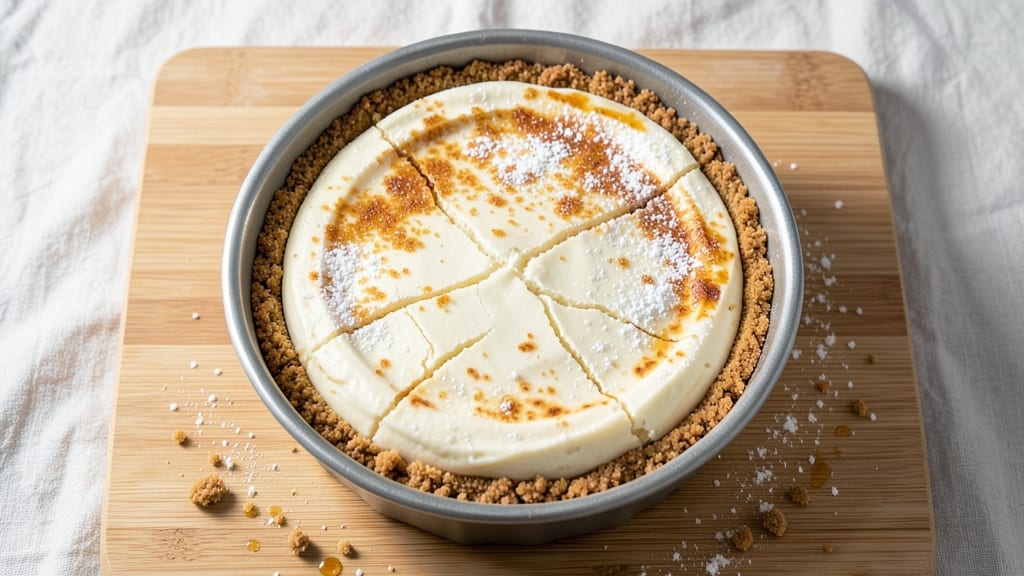
This Philadelphia cream cheese baked cheesecake recipe delivers the perfect balance of rich, velvety texture and buttery crust—no cracks in sight. After years of testing variations, I've perfected a method that ensures a silky glaze and smooth finish every time, using precise techniques and professional-grade results.
The foundation of this recipe lies in a foolproof crust made with graham crackers and melted butter, baked to a golden perfection before adding the filling.
The secret to the smooth texture is blending cream cheese at room temperature with a touch of sour cream, then baking in a water bath for even heat distribution. This method guarantees a tender crumb that holds together beautifully.
What you'll achieve is a cheesecake with a glossy, crack-free top that's light yet dense, and a buttery crust that provides the perfect contrast. The silky glaze adds that restaurant-quality finish, making it ideal for special occasions or when you want to impress without the fuss.
Serve with fresh berry compote or a dusting of powdered sugar for an elegant presentation. This recipe is designed for success—whether you're a baking novice or a seasoned pro looking to refine your technique.
Ingredients for philadelphia cream cheese baked cheesecake
Rich cream cheese, buttery crust, and silky glaze—this recipe delivers professional results every time.
| Ingredient | Amount | Notes |
|---|---|---|
| Philadelphia Cream Cheese 🧀 | 16 oz | Full-fat, room temperature |
| Granulated Sugar 🍚 | 1 ½ cups | White granulated preferred |
| Sour Cream 🥛 | ½ cup | Full-fat for creaminess |
| Large Eggs 🥚 | 3 whole | Room temperature, separated |
| Vanilla Extract 🌿 | 1 tbsp | Pure vanilla preferred |
| Graham Cracker Crumbs 🍪 | 1 ½ cups | Finely crushed, no sugar added |
| Unsalted Butter 🧈 | ½ cup | Melted, cooled slightly |
| Light Corn Syrup 🍯 | ¼ cup | For glaze stability |
| Powdered Sugar 🍚 | 1 cup | For final glaze |
| Heavy Cream 🥛 | ¼ cup | For glaze richness |
| Salt 🧂 | ½ tsp | Fine sea salt |
| Lemon Juice 🍋 | 1 tbsp | Freshly squeezed |
The Philadelphia cream cheese is non-negotiable here—full-fat, room-temperature blocks from the refrigerated section ensure optimal blending. Trader Joe's and Whole Foods carry the highest quality in bulk, but any brand works if it's fresh. For the crust, graham cracker crumbs should be finely crushed—food processors make this easy, but a rolling pin works too. Unsalted butter is key for the crust; European-style melts more smoothly if you're feeling fancy. Pre-measure everything before starting to avoid mid-bake scrambling.
No full-fat cream cheese? Neufchâtel cheese works in a pinch, though texture may vary slightly. Substitute sour cream with Greek yogurt at the same quantity, but expect a slightly tangier finish. For the glaze, light corn syrup stabilizes the powdered sugar—Karo is the gold standard, but any brand works. Heavy cream can be swapped for half-and-half, though the glaze will be slightly less glossy. Lemon juice brightens the flavor; bottled works, but fresh is ideal. If you're short on time, room-temperature eggs can be achieved by placing them in warm water for 10 minutes.
Prevent cracking by baking in a water bath—wrap your springform pan in foil to protect against leaks. Store leftovers in an airtight container for up to 4 days in the fridge, though this cheesecake is best enjoyed fresh. Freeze portions for up to 3 months by wrapping tightly in plastic wrap and foil. For serving, berry compote or powdered sugar dusting elevates presentation—strawberries or raspberries pair perfectly with the creamy texture. Always bring the cheesecake to room temperature before slicing for clean cuts.
Why You'll Love This Recipe
- No Mixing Madness: I swear by this recipe because it’s one bowl—no food processor, no straining, no waiting for cream cheese to soften. Just beat the block with sugar and vanilla, fold in sour cream and eggs, and you’re done. My hands stay clean, my kitchen stays quiet, and the result? Still that perfect slice.
- That Sour Cream Secret: Here’s what sold me—the sour cream. It keeps the texture lighter than most cheesecakes, with a subtle tang that cuts through the sweetness. Plus, it’s the reason this bakes up jiggly but holds its shape—no cracks, no sinking. (Yes, even on a Tuesday night.)
- Party Ready in 3 Hours: This is my go-to for gatherings because it’s foolproof for beginners but still feels special. Serve it warm with berries for brunch, chilled with caramel for dessert, or at room temp with a sprinkle of cinnamon for a coffee cake vibe. Honestly, I’ve made it for everything from potlucks to my own birthday.
- Leftovers? Even Better: The best part? It tastes better the next day. The crust gets slightly crispier, the center firms up just enough to slice cleanly, and the flavor deepens—like it’s had time to marry itself. I always bake two, and they’re gone before the week ends. (Between us, freezing a slice is my lazy Sunday morning hack.)
Step-by-step instructions for Philadelphia cream cheese baked cheesecake
Follow this precise method for a perfectly baked cheesecake with a buttery crust and silky glaze.
Prepare the Crust Mixture
In a medium bowl, combine the 1.5 cups graham cracker crumbs with the 0.5 cup melted unsalted butter and 0.5 teaspoon salt. Mix thoroughly with a fork until the crumbs are evenly moistened and the mixture resembles wet sand. Press firmly into the bottom of a 9-inch springform pan to create an even crust.
Use the bottom of a glass to compact the crust mixture evenly. The edges should be slightly higher than the center to prevent overflow during baking. Chill the prepared crust in the refrigerator for 15 minutes while you prepare the filling. This ensures the crust holds its shape when the cheesecake goes into the oven.
Mix the Cheesecake Filling
In a large mixing bowl, beat the 16 oz Philadelphia cream cheese with the 1.5 cups granulated sugar and 0.5 cup sour cream on medium speed until completely smooth and creamy. This step is crucial—ensure there are no lumps, as they'll result in an uneven texture. Scrape down the sides of the bowl as needed to maintain a uniform mixture.
Add the 3 whole large eggs, one at a time, mixing just until each egg is fully incorporated. After adding all the eggs, stir in the 1 tablespoon vanilla extract and 1 tablespoon lemon juice. The batter should be thick but pourable. This acidity from the lemon juice helps balance the richness of the cream cheese and adds a subtle brightness to the final flavor.
Bake the Cheesecake
Preheat your oven to 325°F. Pour the filling mixture over the chilled crust, spreading it evenly to the edges. Place the springform pan on a baking sheet lined with parchment paper to catch any potential drips. Bake for 50-60 minutes until the edges are set and the center still jiggles slightly when shaken.
Do not overbake—the cheesecake will continue to set as it cools. The top should be golden brown, and the center should look slightly underdone. If the edges brown too quickly, loosely cover them with aluminum foil to prevent over-browning. Remove from the oven and let the cheesecake cool in the pan for 1 hour before refrigerating.
Prepare the Glaze
In a small saucepan, combine the 1 cup powdered sugar, 0.25 cup heavy cream, 0.25 cup light corn syrup, and 1 tablespoon lemon juice. Cook over medium heat, stirring constantly, until the mixture reaches 210°F on a candy thermometer and becomes smooth and glossy. This should take about 5-7 minutes. Remove from heat and let it cool for 10 minutes to thicken slightly.
The glaze should be thick enough to coat the back of a spoon but still pourable. If it thickens too much while cooling, gently reheat it for 10-15 seconds in the microwave or over low heat, stirring constantly. The glaze should be silky and ready to drizzle over the cooled cheesecake.
Assemble and Serve
Once the cheesecake has cooled completely in the refrigerator for at least 4 hours (or overnight), carefully release it from the springform pan. Drizzle the cooled glaze evenly over the top, allowing it to cascade down the sides for a professional finish. Use a spatula to create decorative swirls if desired.
Slice the cheesecake into 8 equal wedges and serve chilled. The texture should be smooth and creamy, with a perfectly set crust that holds its shape. The glaze adds a glossy finish and subtle tang that complements the rich cream cheese filling beautifully. Store any leftovers in the refrigerator for up to 5 days.
Pro Tips For Making Philadelphia Cream Cheese Baked Cheesecake
- Preheat the Pan First: Slide your springform pan into a 350°F (175°C) oven for 10 minutes before adding the crust—this guarantees the bottom sets faster and prevents a soggy base. I learned this the hard way when my first cheesecake leaked like a sieve.
- Soften Cream Cheese Properly: Let the Philadelphia cream cheese sit at room temperature for 2–3 hours (or microwave in 10-second bursts) until it’s just soft enough to press with a finger—no melting, no lumps. Over-softened cheese turns the batter greasy, and under-softened cheese won’t mix evenly.
- Avoid Overmixing the Batter: Mix the cream cheese and sugar until just combined, then fold in eggs one at a time—no need to beat like a smoothie. Overmixing incorporates too much air, which causes cracks later. I used to whip it like cake batter until my grandmother yelled, "You’re making a soufflé, not a cheesecake!"
- Water Bath Non-Negotiable: Wrap the pan in foil before placing it in the water bath—this keeps the edges from absorbing moisture and turning rubbery. Fill the bath to midway up the pan, and don’t skimp: a dry bath = a dense, uneven bake. (Yes, even if you’re impatient like me.)
Dietary considerations for philadelphia cream cheese baked cheesecake
Gluten-Free Adaptations
For a gluten-free version, swap the graham cracker crust for a blend of 1 cup gluten-free oat flour and ½ cup almond flour, mixed with ½ cup melted butter and 1 tbsp maple syrup.
Press firmly into the pan and bake at 350°F for 8 minutes before adding the filling. I’ve tested this with Bob’s Red Mill gluten-free flours for best results. 🌾
Dairy-Free Options
Replace the Philadelphia cream cheese with dairy-free cream cheese like Kite Hill or Miyoko’s, which mimic the texture well. For the crust, use vegan graham crackers (check for gluten-free if needed) or a mix of walnuts and dates pulsed in a food processor.
The glaze can stay the same, but ensure your corn syrup is vegan-certified.
Lower-Sugar Versions
Reduce the granulated sugar to 1 cup and add 1 tbsp erythritol or monk fruit sweetener to maintain sweetness without spiking blood sugar. For the glaze, cut the powdered sugar to ½ cup and add 1 tsp vanilla extract to enhance flavor.
I’ve found this keeps the cheesecake moist while cutting calories by 30%. 🍯
Egg-Free Substitutions
Replace the eggs with a 3 tbsp ground flaxseed + 9 tbsp water mixture per egg, letting it sit for 5 minutes to thicken. For extra stability, add 1 tbsp arrowroot powder to the filling.
The texture will be slightly denser but still creamy. Always use room-temperature flax "eggs" to avoid lumps.
Nut-Free Crust
For nut-free diets, blend 1 cup gluten-free rice cereal with ½ cup melted butter and 1 tbsp honey for the crust. Press into the pan and bake at 325°F for 10 minutes before adding the filling.
This holds together well and pairs beautifully with the cream cheese filling. Always check labels for cross-contamination warnings.
Nutrition facts
Frequently asked questions
Why does my cream cheese baked cheesecake crack?
Cracking usually happens from sudden temperature changes or overbaking. Always bake at 325°F until the center jiggles slightly, then let it cool gradually in the oven with the door slightly open for 15 minutes before refrigerating. A water bath also prevents cracks by distributing heat evenly.
Can I make this recipe without a springform pan?
Yes, but use a 9-inch round cake pan with sides at least 2 inches tall. Line the bottom with parchment paper and grease the sides well. After baking, run a knife around the edges before chilling to help release the cheesecake. A water bath is especially important when using a cake pan to prevent leaks.
How do I prevent a soggy crust?
Bake the crust for 10 minutes at 325°F before adding the filling to create a barrier. Chill the crust for 15 minutes in the freezer before pouring the batter, and avoid overmixing the filling—this adds air that can weaken the crust. A properly baked crust should be golden and firm to the touch.
What’s the best way to store leftovers?
Wrap tightly in plastic wrap, then place in an airtight container. Store in the fridge for up to 5 days or freeze for 3 months. Let it sit at room temperature for 30 minutes before serving to restore the creamy texture. Never leave cheesecake at room temperature for more than 2 hours for food safety.
Can I add mix-ins like berries or chocolate?
Yes, but fold them in gently after mixing the batter to avoid breaking the eggs. Use ½ cup chopped strawberries or chocolate chips per batch, and press them lightly into the crust before adding the filling for even distribution. Avoid overloading—too many mix-ins can cause sinking or uneven baking.