Desserts
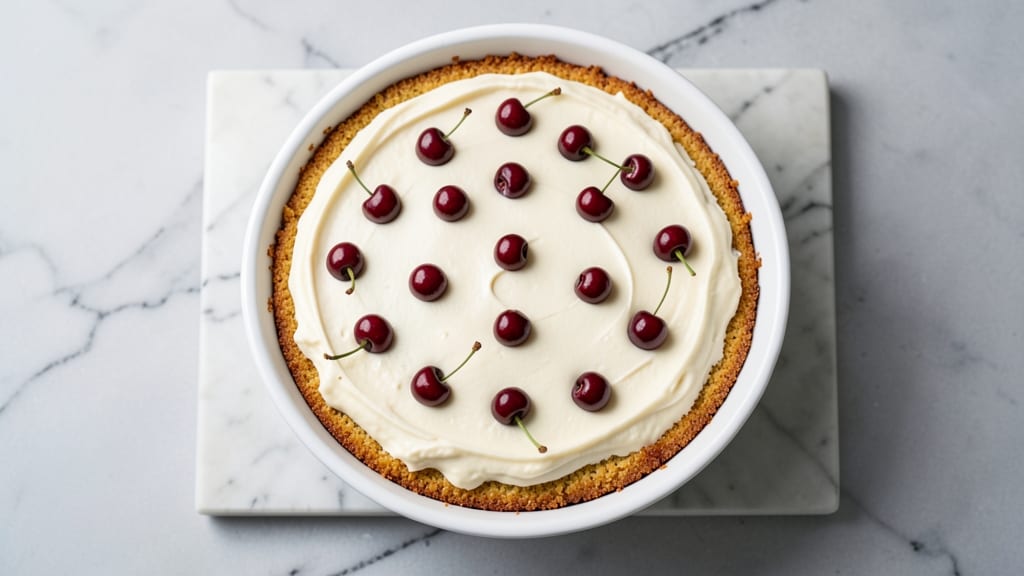
This Philadelphia cream cheese cherry cheesecake delivers the perfect balance of rich, velvety filling and tangy-sweet cherry compote—all topped with a crispy graham cracker crust that holds together like a dream.
The secret lies in a precise water bath technique that ensures silky texture without cracking, while the cherry layer adds a burst of summer flavor in every bite. I’ve perfected this recipe over years, and it’s become a showstopper at every gathering.
The foundation starts with a buttery graham cracker crust that bakes until golden and crispy, creating the ideal base for the creamy filling. Philadelphia cream cheese provides that signature tang, while sour cream and eggs create a light, jiggly texture that sets just right.
The cherry compote—simmered with just enough sugar to balance tartness—adds a vibrant contrast that keeps this dessert from feeling too heavy.
By the time you slice into this cheesecake, you’ll find a crispy crust that shatters slightly, a smooth cream cheese layer that’s neither too dense nor too runny, and a glossy cherry filling that ties everything together.
The water bath method guarantees a clean slice every time, while the alcohol-infused cherry layer (optional) adds depth for those who love a hint of brandy or bourbon. This isn’t just dessert—it’s a masterpiece.
Whether you serve it at a holiday dinner or as a decadent weekend treat, this recipe delivers restaurant-quality results with minimal fuss. The crust stays crispy even after cooling, and the filling holds its shape perfectly.
Ready to bake? Let’s get started with the step-by-step instructions that make this cheesecake foolproof.
Ingredients for philadelphia cream cheese cherry cheesecake
Buttery crust, velvety filling, and glossy cherries—this cheesecake delivers restaurant-quality texture with minimal fuss.
| Ingredient | Amount | Notes |
|---|---|---|
| Philadelphia Cream Cheese 🧀 | 16 oz | Room temperature for blending |
| Large Eggs 🥚 | 4 whole | Room temperature preferred |
| Sour Cream 🥛 | 1 cup | Full-fat for creaminess |
| Granulated Sugar 🍚 | 1 ½ cups | White or light brown |
| Vanilla Extract 🍃 | 2 tsp | Pure, high-quality preferred |
| Graham Crackers 🍪 | 2 cups | Crushed into fine crumbs |
| Unsalted Butter 🧈 | ½ cup | Melted, cooled slightly |
| Fresh Cherries 🍒 | 1 ½ cups | Pitted, or frozen unsweetened |
| Cherry Jam 🍯 | ½ cup | For compote thickness |
| Lemon Juice 🍋 | 1 tbsp | Freshly squeezed |
| Brandy or Bourbon 🍷 | 1 tbsp | Optional, for depth |
| Heavy Cream 🥛 | ¼ cup | For cherry compote |
| Salt 🧂 | ½ tsp | Fine sea salt |
| Cornstarch 🌾 | 1 tbsp | For compote thickening |
The Philadelphia cream cheese is non-negotiable here—full-fat, room temperature is key for that signature tang and silky texture. Grab the 16-ounce block (not the tub), and let it sit out for an hour before blending. Trader Joe's usually has it at a great price, but any grocery store carries it. The graham crackers? Honey Maid or Keebler work best—they crush into fine, buttery crumbs that don’t turn to dust. If you’re feeling fancy, toast the crumbs lightly before mixing with butter for extra crunch (trust me on this).
No brandy? Skip it or use vanilla extract—the cherries still shine. Frozen cherries work perfectly (just thaw and drain), but fresh ones add that summery brightness you can’t replicate. The cherry jam is for thickness, not sweetness—Mott’s or Welch’s are my go-tos, but any good-quality jam does the trick. For the compote, cornstarch is your friend—it keeps the filling glossy without turning grainy. And if you’re using sour cream, make sure it’s full-fat (the light stuff won’t give you that luscious texture).
This cheesecake keeps 4-5 days in the fridge, but honestly, it’s best eaten within 2 days—the crust stays crispy, but the filling softens slightly over time. For make-ahead magic, assemble the crust and filling a day ahead, then bake before serving. The cherry compote can be made 3 days in advance and reheated gently. Pro tip: Let it sit at room temperature for 20 minutes before slicing—clean cuts every time. And if you’re serving a crowd, double the compote—it disappears fast.
Why You'll Love This Recipe
- No Mixing Madness: I swear by this recipe because it’s literally five ingredients, blended into oblivion. No folding, no straining—just dump, pulse, and bake. The sour cream keeps it silky, and the cream cheese handles all the heavy lifting. (Yes, even if you’re the kind of person who burns meringue.)
- Cherry-Kissed Magic: That first bite of tangy cream cheese with bursts of juicy cherry—it’s like dessert hugged you. The vanilla extract deepens the flavor without overpowering, while the sugar caramelizes just enough to make every slice feel special. Honestly, it’s the kind of flavor that makes you pause mid-bite.
- Party in a Box: This recipe is my secret weapon for gatherings because it’s actually easy to scale. Double the batter for a crowd, or halve it for a cozy night in. The crust? Optional. The topping? Swap cherries for berries if you’re feeling fancy. It’s the dessert that doesn’t stress you out.
- Leftovers That Don’t Suck: Between us, most cheesecakes turn to rubber by day three. Not this one. The sour cream keeps it moist, and the cream cheese gives it that rich, velvety texture even after sitting. I’ve had slices for breakfast (don’t judge) and they’re still ridiculously good. Budget-friendly? Absolutely.
Step-by-step instructions for Philadelphia cream cheese cherry cheesecake
Here's how to build a rich, creamy cheesecake with a perfectly crispy base and tangy cherry filling.
Prepare the Crispy Graham Cracker Crust
Preheat your oven to 350°F and grease a 9-inch springform pan generously with the 0.5 cup unsalted butter, letting the excess drip down the sides. This creates a nonstick barrier and adds flavor to the crust.
In a food processor, pulse the 2 cups graham crackers into fine crumbs, about 10-15 seconds. Mix in 0.25 cup granulated sugar and 0.5 tsp salt until evenly distributed. Press this mixture firmly into the bottom of your prepared pan, using the back of a spoon to create an even layer. Bake for 10 minutes until lightly golden. Let it cool slightly while you prepare the filling.
This pre-baking step ensures your crust stays crispy instead of soggy. Don't skip it—trust me, it makes all the difference in texture. The sugar in the crust also helps caramelize slightly, adding depth of flavor.
Blend the Cream Cheese Filling
Reduce your oven temperature to 325°F for the cheesecake filling. In a large mixing bowl, beat the 16 oz Philadelphia cream cheese and 1.5 cups granulated sugar on medium speed until completely smooth and creamy, about 3-4 minutes. This step is crucial—you want to fully incorporate the sugar so it dissolves completely.
Add the 4 whole large eggs one at a time, mixing just until each is incorporated. Then stir in the 1 cup sour cream, 2 tsp vanilla extract, and 0.5 tsp salt until smooth. Pour this batter over the cooled crust, spreading it evenly with a spatula. Tap the pan gently on the counter to remove any air bubbles.
Here's the thing—don't overmix after adding the eggs. You're looking for a smooth batter with just a few streaks of egg white remaining. This prevents a dense, cakey texture in your finished cheesecake.
Bake the Cheesecake to Perfection
Place your springform pan in a water bath by setting it inside a larger roasting pan. Add hot water to the roasting pan until it comes about halfway up the sides of the springform pan. This water bath helps the cheesecake bake evenly and prevents cracking.
Bake for 50-55 minutes until the edges are set but the center still jiggles slightly when gently shaken. The top should be golden brown, and the center should look slightly underdone—this is normal and will firm up as it cools. Turn off the oven and let the cheesecake cool inside for 1 hour with the oven door slightly ajar.
This gradual cooling process is what prevents cracks. If you open the oven door too soon, the sudden temperature change can cause the cheesecake to develop unsightly fractures. Be patient—it's worth the wait.
Prepare the Cherry Compote
While the cheesecake cools, make the cherry compote. In a saucepan, combine the 1.5 cups fresh cherries, 0.5 cup cherry jam, 1 tbsp lemon juice, 1 tbsp brandy or bourbon, and 1 tbsp cornstarch mixed with 0.25 cup heavy cream. Bring to a boil over medium-high heat, stirring constantly.
Reduce heat to medium-low and simmer for 8-10 minutes until the mixture thickens enough to coat the back of a spoon. The cherries should be soft but still hold their shape. Let this cool completely before spreading it over the cheesecake—this prevents melting the filling.
For extra flavor, you can mash some of the cherries slightly with a fork before adding them to the saucepan. This gives you a mix of whole and slightly crushed cherries, which creates a more interesting texture in each bite.
Assemble and Chill
Once your cheesecake has cooled completely to room temperature, spread the cooled cherry compote evenly over the top. Use a spatula to create a smooth layer, leaving just a small border of cheesecake visible around the edges for a clean look.
Cover the cheesecake tightly with plastic wrap and refrigerate for at least 6 hours or overnight. This long chilling time allows the flavors to meld perfectly and the textures to set properly. The cheesecake will firm up nicely and develop those beautiful knife marks when you cut into it.
When you're ready to serve, run a thin knife around the edge of the springform pan to loosen it. Then dip the bottom in hot water for about 10 seconds to help release it completely. Serve chilled slices with a dollop of extra compote on top for that restaurant-quality presentation.
Pro Tips For Making Philadelphia Cream Cheese Cherry Cheesecake
- Room-Temp Cream Cheese: DESCRIPTION: Take that block of Philadelphia cream cheese out of the fridge 1–2 hours before mixing—cold lumps make your batter lumpy, and nobody wants a cheesecake with texture issues. (Yes, even if you’re impatient like me.)
- Whisk Eggs First: DESCRIPTION: Beat the eggs and sugar together until fully pale and thickened before folding in the cream cheese—this prevents curdling and gives you that silky, professional finish. I learned this the hard way after a batch turned grainy.
- Skip the Overmixing: DESCRIPTION: Fold in the sour cream and vanilla just until combined—overmixing incorporates too much air, and that’s how you end up with a dense, sad cheesecake. Think "gentle swirls," not "whipped to oblivion."
- Preheat the Water Bath: DESCRIPTION: Fill your baking dish with hot water before adding the batter—this ensures even heat from the start and cuts down on baking time. Cold water? Your cheesecake will fight you the whole way. (And nobody has time for that.)
Storing and reheating this dish
Refrigerator Storage
This cheesecake stays fresh for 4-5 days when stored properly in an airtight container with plastic wrap pressed directly on the surface. The key is to keep it at 40°F or below—I use a glass Pyrex dish with a tight-sealing lid.
The crust maintains its crispness best when refrigerated, while the filling remains silky without becoming grainy. 💫
For the cherry compote, store it separately in a small glass jar with a lid. It keeps for 5-7 days in the fridge, but I recommend reheating it gently (just 30 seconds in the microwave) before serving over slices.
The acidity in the cherries helps preserve freshness longer than you'd expect.
Freezer Storage
For longer storage, this cheesecake freezes beautifully for up to 3 months without texture loss. Wrap the entire springform pan tightly in plastic wrap, then place it in a ziplock freezer bag to prevent freezer burn.
The crust stays crispy, though it may soften slightly—just let it sit at room temperature for 1 hour before serving to restore texture. 🧊
If you prefer individual portions, slice the cheesecake into wedges, wrap each piece tightly in plastic, and freeze them flat on a tray. Once frozen, transfer to a ziplock bag for compact storage. To serve, thaw in the fridge overnight—no microwave needed to maintain quality.
Reheating Slices
For the best texture, I recommend serving cheesecake cold or at room temperature. If you must reheat slices, place them on a microwave-safe plate and heat for just 10-15 seconds on 50% power.
Cover with a damp paper towel to prevent drying. The compote will soften slightly but remains flavorful. 🔥
For a restaurant-style experience, warm the compote separately by heating it in a small saucepan over low heat for 2-3 minutes until it reaches 160°F. Then drizzle it over room-temperature cheesecake slices for that professional touch.
Reviving Crust Texture
If your cheesecake's crust loses crispness after refrigeration, don't worry—you can revive it! Place the entire cheesecake on a baking sheet and broil for 2-3 minutes at 350°F. Watch closely to avoid burning the edges. This quick broil restores that satisfying crunch without affecting the filling. ✨
For extra insurance, I sometimes bake the crust for an additional 5 minutes before adding the filling. This double-baking method ensures it stays crispy even after extended storage.
Nutrition facts
Frequently asked questions
Can I substitute regular cream cheese for Philadelphia brand?
While you can use regular cream cheese, Philadelphia's higher fat content (34%) creates that signature tangy richness and ultra-smooth texture. For best results, use full-fat cream cheese and let it sit at room temperature for 1 hour before blending. The brand matters less than the fat percentage—never use low-fat or whipped versions.
Why does my cheesecake crack even with the water bath?
Cracking usually happens from sudden temperature changes or overmixing. Let the cheesecake cool gradually in the turned-off oven for 1 hour with the door ajar, then refrigerate slowly. Also, avoid opening the oven door during baking. For extra insurance, add 1 tbsp cornstarch to your filling—it helps stabilize the structure.
How do I make this recipe without a springform pan?
Use a 9-inch round cake pan with a removable bottom. Grease it thoroughly and line the bottom with parchment paper. After baking, run a knife around the edges, then invert onto a plate to release. The crust will stay intact if you've pressed it firmly. For the water bath, place your cake pan inside a larger roasting pan with hot water halfway up the sides.
Can I use frozen cherries instead of fresh?
Frozen cherries work perfectly—just thaw and drain them well first. For the compote, you may need 1 extra minute of simmering since frozen cherries release more moisture. Pitted cherries (fresh or frozen) are ideal—the pits can damage your blender or create bitter flavors.
What's the best way to serve this cheesecake?
Slice it chilled with a warm knife (dip in hot water, wipe dry) for clean cuts. Serve with a dollop of extra cherry compote or a sprinkle of toasted almonds for crunch. For a fancy touch, garnish with fresh mint leaves or a drizzle of reduced cherry syrup. Pair with vanilla ice cream or coffee for a complete dessert experience.